Two AI developers and me: how I build with Claude Code and Codex
Two AI developers and me: how I build with Claude Code and Codex
I pay for two AI plans: Claude and ChatGPT. I could use them in two windows and copy things from one to the other. Instead, I talk to one Claude Code conversation, and it hands work to Codex (OpenAI) by itself.
This is how I built Snailkit, the Obsidian plugin I just released.
The setup
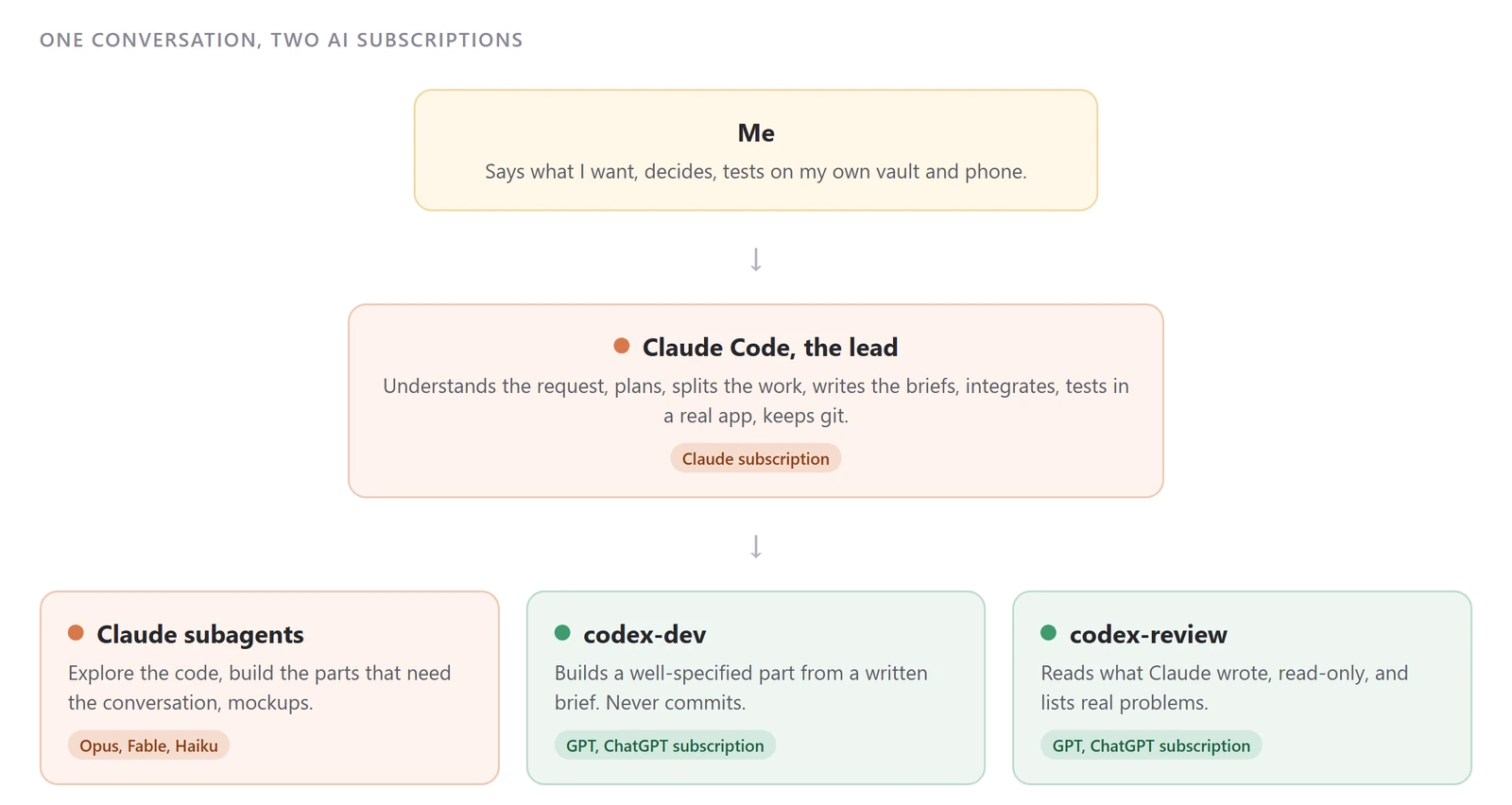
Claude Code can call subagents. Two of mine don’t run Claude: they run the Codex command line, so the work goes to GPT and is billed to my ChatGPT plan.
- codex-dev can write code. It gets a written brief, works on a precise set of files, and never commits.
- codex-review is read-only. It reads a diff and lists the real problems it finds.
Claude Code stays the lead. It plans, splits the work, writes the briefs, puts everything together, tests, and handles git. I talk to it in French, about what I want. I decide, and I test on my own vault and on my phone.
The rules
They live in my personal CLAUDE.md, so every conversation follows them:
Keep on Claude: planning, anything that needs this conversation, git, small edits.
Send to codex-dev: work that fits in a written brief and can be checked afterwards.
Send to codex-review: any substantial change written by Claude.
GPT sees nothing of the conversation: every brief stands alone.
Codex never commits. Claude reads the diff and owns the result.
The last two lines matter most. A brief has to say the goal, the files, the constraints and the command that proves it works. Writing that well is half the job.
What it looks like for real
- Cross review catches real bugs. Claude built a new tag picker. GPT reviewed it and found six real problems, for example a task saved under the wrong tag in an empty list. Claude fixed all six before I ever saw them.
- Each one catches the other. Obsidian’s automated review flagged a hundred warnings. GPT could not reproduce them. Claude found why: a type library that the review machine didn’t have. Then it proved it by hiding that library on my machine.
- Two streams at once. On the phone redesign, GPT reworked the Home tab while Claude reworked Tasks, on separate files, at the same time.
- The boring work goes out. GPT cleaned up the plugin’s styles and checked 273 cases to prove nothing changed on screen.
Ask three, keep one
Before building something visual, I ask for several mockups from one brief. Opus does one, Fable another, GPT a third, or GPT challenges the idea instead. I open them side by side and choose. For the tag picker, Fable’s version won.
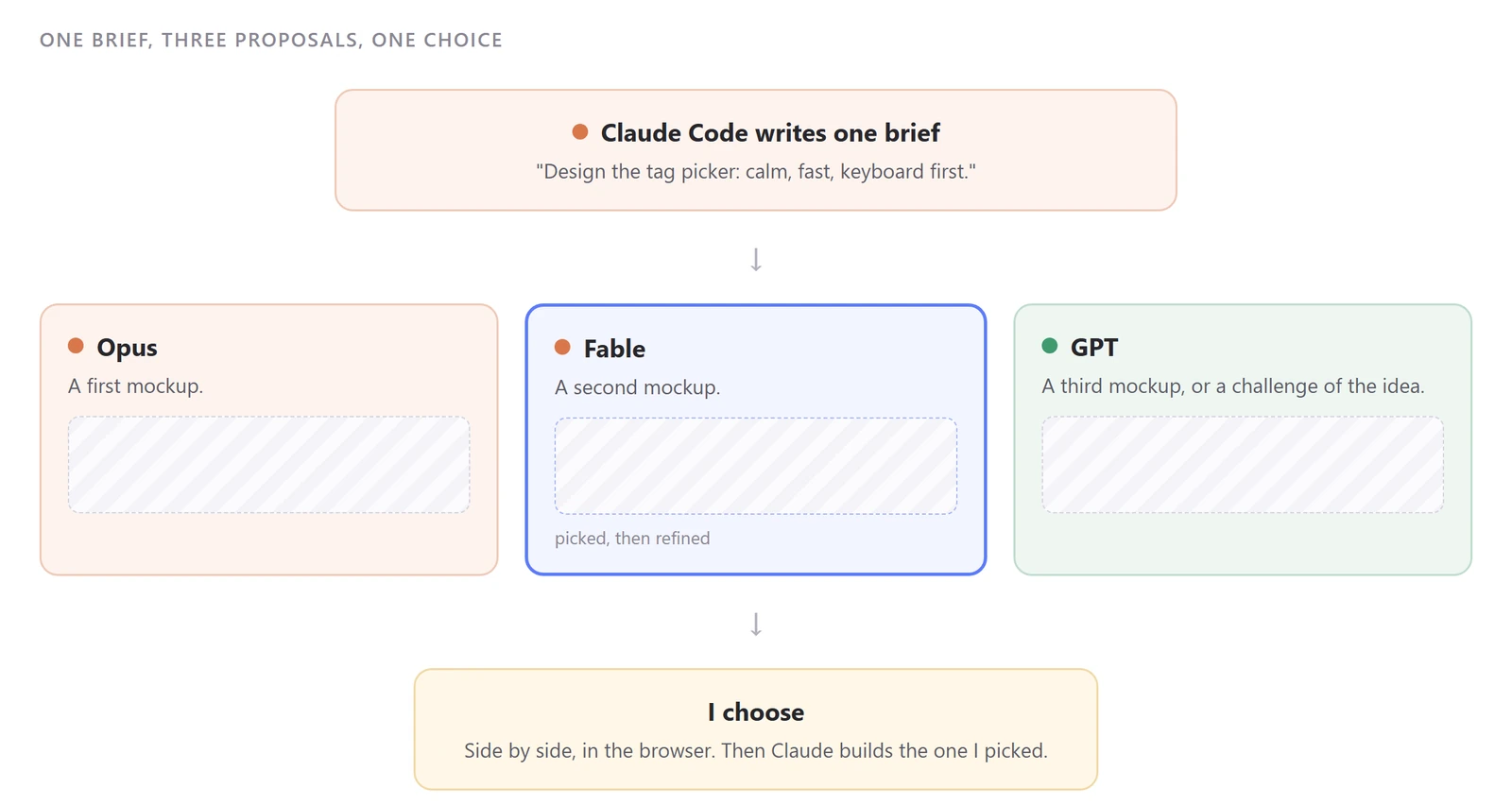
It also works for plain ideas: “here is my plan, tell me what’s wrong with it” to a model that wrote none of it.
Spreading the usage
Every task Codex takes is usage that doesn’t count on my Claude plan. When one plan runs low, I just say so, and Claude sends more work to the other side. Same conversation, nothing to copy and paste.
What it doesn’t do
It doesn’t make me a spectator. Codex once read an old brief and reviewed the wrong code, and Claude had to catch it. Every result still gets read, built, tested in the real app, and then tested by me. The AIs write most of the code. The decisions, the taste and the “no, not like this” are still mine.
Want to try it? Start small: one
codex-reviewsubagent that reviews Claude’s diff before you commit. It’s the cheapest way to get a second pair of eyes.